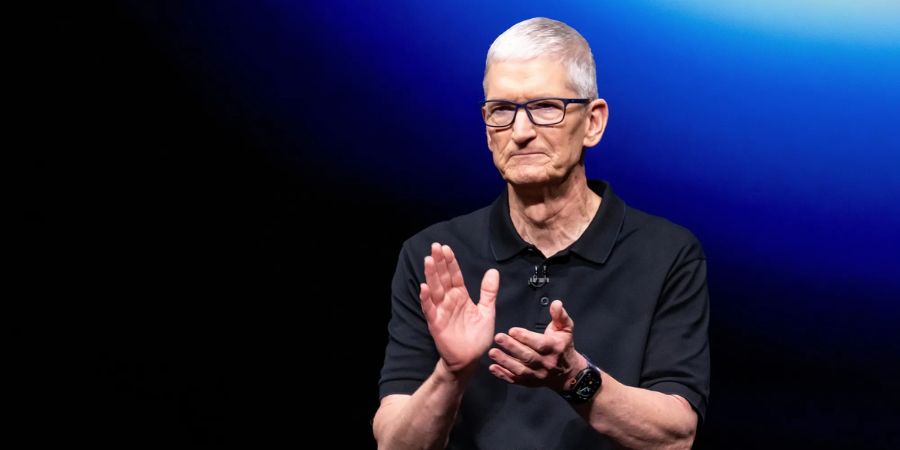
In a landmark announcement that marks the close of one of the most influential leadership tenures in modern technology, Tim Cook has revealed plans to step down as Chief Executive Officer of Apple. After more than a decade at the helm, Cook’s departure signals a major transition for the world’s most valuable company and raises questions about its future direction in an increasingly competitive global market.
Cook, who took over leadership from Steve Jobs in 2011, has been widely credited with not only preserving Apple’s legacy but expanding it into new territories. Under his guidance, Apple evolved from a company known primarily for the iPhone into a diversified tech giant with strong footholds in services, wearables, and digital ecosystems.
A Legacy Defined by Growth and Stability
During his tenure, Cook oversaw remarkable financial growth, with Apple’s market valuation soaring to unprecedented levels. The company introduced successful product lines such as the Apple Watch and AirPods, while significantly expanding its services division, including Apple Music, iCloud, and Apple TV+. His leadership style, often described as calm and operationally focused, contrasted with Jobs’ visionary persona but proved equally effective in driving consistent performance.
Cook also emphasized corporate responsibility, pushing Apple toward greater environmental sustainability and supply chain transparency. His advocacy for privacy rights and ethical technology use positioned Apple as a leader in user data protection, distinguishing it from many competitors.
However, his time as CEO was not without challenges. Apple faced increasing scrutiny from regulators worldwide over antitrust concerns, App Store policies, and market dominance. Additionally, maintaining innovation momentum in a saturated smartphone market proved to be an ongoing test.
What Comes Next for Apple?
While Apple has not officially confirmed a successor at the time of the announcement, industry speculation points toward senior executives within the company’s leadership team. Names like John Ternus and Jeff Williams have surfaced as potential candidates, both of whom have played critical roles in Apple’s recent success.
The transition comes at a crucial time as Apple continues to invest heavily in emerging technologies such as artificial intelligence, augmented reality, and custom silicon. The company’s long-term projects, including advancements in mixed reality headsets and potential innovations in mobility, will likely define the next era of leadership.
Cook’s departure also carries symbolic weight. As the first CEO to follow Jobs, he bridged two distinct eras of Apple—one defined by revolutionary product creation and the other by strategic scaling and ecosystem dominance. His exit marks the end of that bridge and the beginning of a new chapter.
In his statement, Cook expressed confidence in Apple’s future, emphasizing the strength of its leadership team and the company’s enduring values. “Apple is stronger than ever,” he noted, reinforcing the idea that the company is well-positioned to continue its trajectory of innovation and impact.
As the tech world watches closely, one thing is certain: Tim Cook’s influence on Apple—and the broader technology landscape—will be felt for years to come.
Read Also: Zara Founder Amancio Ortega to Receive Record €3.23 Billion Dividend from Inditex