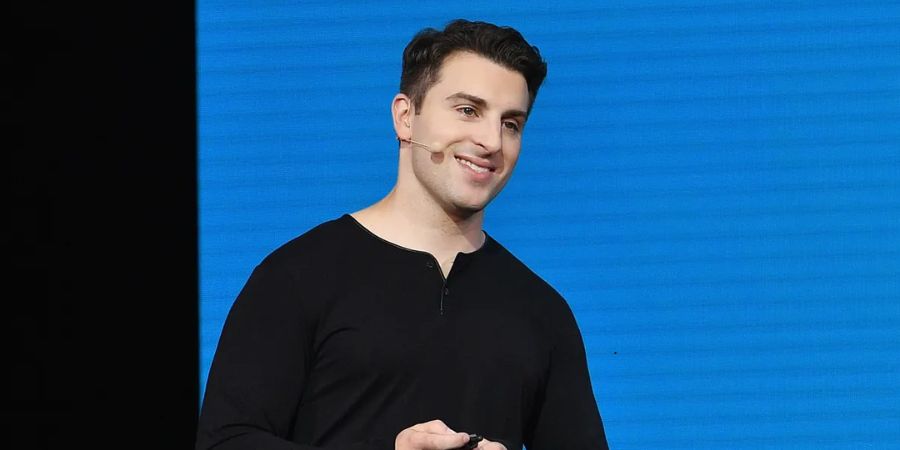
The effect few contemporary entrepreneurs have had on everyday life rivals what Brian Chesky accomplished. While most founders pursue growth at all costs, Chesky picked something else — design, trust and human connection. He didn’t just build a company; he changed how millions of people feel about travel, belonging and community around the world.
This blog takes you behind the scenes of Brian Chesky’s rise to power, his philosophy and style in the trenches, and how his work is reshaping our world. And maybe you’ll find out why his story still moves founders, designers and dreamers worldwide.
Brian Chesky’s Childhood and Creative Inquisitiveness
Brian Chesky was born in 1981 in Niskayuna, N.Y. He had a strong inclination towards creative work and finding solutions to problems from his early days. While other kids had more typical trajectories, Chesky spent his free time sketching and designing, puzzled over the way things were made, and tried to dream up ways that objects and spaces could have more meaning.
He would later go on to attend the Rhode Island School of Design (RISD), where his love for design was born. Invaluable, this entrepreneurial apologetics would form the basis of his thinking as a businessman. Instead of thinking of business in terms that only show up on the ledger, he thought of it as an experience: something that could be intentionally crafted from the perspective of the consumer.
While at RISD, Chesky became friends with Joe Gebbia, another design student. This would be a meeting that, in the end, changed both their lives. At the time, neither had any intentions to start a tech giant, but their mutual focus on design-driven problem-solving would sow the seeds for something remarkable.
Brian Chesky and the Inspiration Behind Airbnb
The Airbnb concept wasn’t a function of ambition, it was out of necessity. In 2007, Chesky and Gebbia had trouble paying their rent in San Francisco. At that very moment, a huge design conference had virtually booked every hotel room in the city. Instead of throwing in the towel, they saw an opportunity under their noses.
They bought air mattresses, threw together a simple website and invited people to stay in their apartment. This tiny experiment, dubbed “Air Bed & Breakfast,” produced money and, more importantly, learning. If trust and experience were designed thoughtfully, people would stay in a stranger’s house.
However, success didn’t come overnight. Early rejections were constant. Investors doubted the idea. Many never thought that people would trust strangers with their homes. But Chesky didn’t give up, fine-tuning the idea by immersing himself in user feedback.
How Brian Chesky Created a Breakthrough From Rrejection
Rejection turned out to be one of Brian Chesky’s best teachers. Instead of interpreting the word “no” as failure, he saw it as data. Each no from an investor forced the team to refocus and improve their story.
One of the turning points was its participation in the Y Combinator start-up accelerator. Paul Graham, the program’s co-founder, convinced Chesky that he should obsess over users. So Chesky took it upon himself to meet with hosts in person, stay with them and hear their problems.
Airbnb started to grow by revamping listings with professional photography and reworking trust features. What was first only a farfetched notion became in time one of the most reliable worldwide channels.
Leadership philosophy and vision of Brian Chesky
Brian Chesky’s style of leadership is different than your typical corporate mold. Rather than turn over vision, he continues to be deeply involved in product design, company culture and storytelling. He thinks leaders should be “chief designers” of experiences and values.
What’s more, Chesky is an advocate for thinking long-term versus short term. While many companies prioritize quarterly profits, he has often spoken about building something meaningful over decades. This attitude enabled Airbnb to weather the battles that might have crushed less values-centric companies.
Transparency also defines his leadership. In times of crisis, Chesky talk publicly to employees and hosts. For this reason, trust continues to be a cornerstone of Airbnb’s “internal and external culture.”
Brian Chesky and the global expansion of Airbnb
With its global expansion, Airbnb faced new challenges. There are different cultures and regulations and expectations that all needed careful consideration. Instead of trying to impose one way, Chesky advocated a localization but also maintaining the DNA.
Through that strategy, Airbnb expanded to more than 190 countries. Hosts from different walks of life started inviting travelers into their homes, and relationships developed beyond tourism. As a result, Airbnb has transitioned from an online booking site to a worldwide community.
Significantly, Chesky never cast Airbnb as a mere hotel alternative. Instead, he positioned it as a means to “belong anywhere.” The emotional story struck a chord with travellers looking for genuine experiences.
Crisis Leadership: An Interview with StoneBeam Automation’s Brian Chesky
Every one of our terrific leaders has moments of crisis. For Brian Chesky, the coronavirus pandemic was among the most defining. Overnight travel ground to a shuddering halt, and Airbnb’s revenue disappeared. Confronted with this reality, Chesky had to make some of the most difficult decisions of his career.
He fired almost 25% of the work force — but Mishima did it with heart. Workforce members were provided with generous severance, long healthcare extensions and personal support in finding other work. His frank letter addressing the decision received widespread acclaim for its empathy.
That way, Airbnb maintained trust when it was low on it. When travel came back, the company was stronger, leaner and more focused than ever.
Design-First Innovation from Brian Chesky Note: I originally published this post in 2014, and given the conversation about design at Airbnb, was inspired to update it recently.
While most tech founders think in code, Brian Chesky thinks in design. He thinks great products begin with understanding the human feeling. So, everything that we do in Airbnb is rooted in trust, comfort and belonging.
Chesky sometimes uses hand-drawn sketches to communicate ideas and pushes teams to think beyond metrics. He might use a phrase like “How does this make people feel?” and “Would this create delight?” Wrubel’s way of thinking is one reason Airbnb has stayed emotionally resonant in a crowded field.
And Chesky is only getting more audacious, from long terms stays to flexible living to immersive experiences.
The Influence of Brian Chesky on Entrepreneurship and Culture
Brian Chesky’s reach is much broader than just Airbnb. He has influenced the way a generation of founders think about business. Mixing creativity and discipline, he showed that empathy and profit are not contradictions in terms.
Chesky has inspired so many entrepreneurs to fully value design thinking, community-driven platforms and mission-led leadership matures. In addition, his path demonstrates that a nontraditional background can also lead to unconventional success.
In the world of culture, Airbnb changed how people think about travel. Rather than peering into cities from hotel windows, travelers are taking up residence in neighborhoods and swapping tales with locals.
Brian Chesky for Aspiring Founders: Lessons Learned
There are many lessons in the story of Brian Chesky. First, perseverance trumps initial validation. Most people turned down Airbnb before it took off. But instead of giving up, Chesky kept perfecting it.
Second, listening to users begets clarity. Through those direct conversations with hosts and guests, Chesky learned things that no spreadsheet could tell him. That’s a habit that still dictates the direction of Airbnb today.
Finally, values shape resilience. Purpose-led companies can pivot when challenges arise, without losing their soul.
The Vision of the Future, Courtesy of Brian Chesky
Moving forward, Brian Chesky is determined to redefine how people live, work and travel. He sees Airbnb as not a travel company, he says, but a platform for human connection across generations of life.
With remote work going mainstream, Chesky believes this could be an opportunity for people to live anywhere — and not just go somewhere occasionally. That vision embodies his fierce belief that design can create freedom and belonging to be felt a lifetime.
In the end, Brian Chesky’s story is a reminder that great companies start from human needs — and scale through courage, creativity and empathy.
Read Also: Ma Huateng: The Visionary Power Behind Tencent