
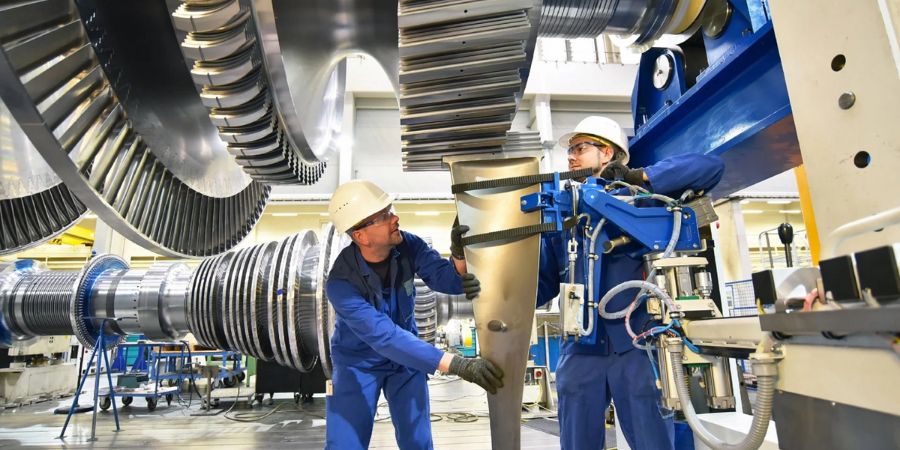
Manufacturing is no longer confined to machines, materials and manpower. Now, it’s about intelligence, connectivity and agility. Around the world, factories are becoming living things as data flow freely, machines talk to one another and decisions are made in real time. This transition is propelled by smart manufacturing developments which are transforming product design, production and delivery.
What do these trends mean for your company, and how should it approach smart manufacturing? This comprehensive guide highlights the most significant smart manufacturing trends driving both current and future industry. Every trend is not just about technology, but also demonstrates a shift in mindset towards efficiency, resilience and sustainability.
Smart Manufacturing Trends: The Emergence of the Connected Factory
Linked factories are the core of smart manufacturing movements. Today’s sensors, machines and system are all integrated via industrial networks allowing information exchange from the shop-floor to the top level. As a result, suppliers have complete visibility in how things run, from raw material receiving to final shipments.
Further, connected factories break down information silos. Information moves across the departments, leading to faster decisions and less friction. When machines “converse” with each other, maintenance downtime goes down and productivity as well as overall efficiency goes up dramatically.
Smart Manufacturing Trends Sponsored by the Industrial Internet of Things (IIoT)
The “IIoT” is vital to the smart manufacturing movement. Manufacturers can track temperature, vibration, energy use and performance in real time by embedding sensors in machines. This information serves as the basis of smarter operations.
What’s more, IIoT provides predictive intelligence rather than a reactive solution. Rather than waiting on machines to fail, companies are able to predict issues and act in advance. Both maintenance and cost reduces, safety is enhanced, and the scheduled production continues.
Smart Factory Trends Driven by AI and ML
AI isn’t a novelty anymore — it’s a necessity. Artificial intelligence and machine learning are among the most transformative smart factory trends as they enable factories to process huge amounts of data in fast and accurate ways. These tools reveal patterns that people may overlook.
Add to that the fact AI-based systems are constantly learning and getting better. They fine-tune production schedules, spot quality problems and suggest things they can do better. Factories, as time go by, get smarter and faster and more precise without much help from humans.
Smart Manufacturing: Trends and Predictive Maintenance for businesses
One of the most common smart manufacturing trends is predictive maintenance. Manufacturers, for example, can foresee when their machines will fail before they do so by looking at machine data. Thus, rather than failure repaiis a list of m interventions to apply on the equipment causing increased grated maintenance performed.
Factories can expect reduced down time and longer equipment life. Meanwhile, maintenance crews are more efficient they spend their time responding to issues not doing routine checks. This change values time, money and effort, at every level of the organization.
Industry 4.0 Automation and Collaborative Robotics in Smart Manufacturing
Automation is on the rise, and collaborative robots — or cobots — are revolutionizing factory floors. Unlike the factory robots of old, cobots coexist with people safely and seamlessly. This transformation is a significant advancement in the trend of smart manufacturing.
Robots take care of repetitive or physically demanding tasks, while human workers work on creative and analytical jobs. Thus, the productivity of an employee rises without having to undermine his or her well-being as a worker. This equipoise of human skill and machine precision is the hallmark of the modern factory.
Trending Smart Manufacturing: Data-Driven Decision Making
Data is the new raw material of manufacturing.” One of the current smart manufacturing trends? Data-driven decision making enables leaders to make decisio0ns with confidence. Interactive dashboards and analytical tools allow near-real-time insights to performance and hotspots.
What’s more, data-based strategies also eliminate guesswork. Manufacturers can model scenarios, predict demand and adapt production plans in short order. This speed of response becomes a competitive edge in markets that move quicker than ever.
Smart manufacturing Trends Enabling Digital Twins
Digital twins are digital representations of physical assets, processes or entire manufacturing facilities. In the era of advanced smart manufacturing, digital twins are being used by manufacturers to model and test changes from within the virtual space before they go live in reality.
Engineers, for instance, can try out new designs, workflows or materials digitally. This adds much less risk, as well as speed to innovation. By connecting the physical and digital realms, digital twins enable manufacturers to confidently tune their operations.
Smart Manufacturing Trends to Improve Supply Chain Visibility
Manufacturing in the modern age doesn’t end at the factory gate. Smart manufacturing is now a trend for the entire supply chain. With real-time tracking, advanced analytics and connected partners, transparency is available from supplier to customer.
The result is that manufacturers are better equipped to respond quickly to disruptions and shifts in demand. They lower inventory waste and bring about greater delivery accuracy. In an uncertain world, visibility is key to supply chain resilience and growth.
Smart Manufacturing Trends and the Changing Workforce
Technology is not the sole force behind smart manufacturing trends. People are still the heart of change. Factories adopt advanced systems that give workers digital tools and training platforms, and augmented reality guidance.
In turn, this evolution brings new opportunities for positions with strong emphasis on data analytics, system refinements and innovation. Meanwhile, it’s enabling staff to work smarter rather than just harder. He also believes that a tech-savvy workforce will help them to extract real long term value from smart manufacturing.
The Latest Trends in Smart Manufacturing: Shaping Sustainability and Energy Efficiency
Sustainability is now a strategic imperative. In terms of some of the smart manufacturing trends, energy monitoring and resource optimization assist factories in decreasing waste as well as reducing emissions. Intelligent systems monitor energy use and point out areas for improvement.
And manufacturers also use sustainability as an excuse to save money. Energy efficient saves money and promotes green responsibility. This twofold advantage gives natural rise to sustainability through the adoption of smart manufacturing.
Trends in Smart Manufacturing: Preparing Factories for the Future
Looking into the next, smart manufacturing trends will still change. Edge computing, 5G connectivity and advanced analytics are also set to boost factory intelligence. With these advancements, they will have the ability to nearly instantaneously adjust and react with more nuance.
At the end of the day, like Industry 4.0, Smart Manufacturing is not a destination, it’s a journey. Manufacturers who accept a mindset of continuous improvement, digital innovation and human-centered design will not just survive but thrive in this next industrial age.
So Why Are Smart Manufacturing Trends Important Now More Than Ever?
The rapidly transforming industrial landscape is witnessing trends on smart manufacturing coming in thick and fast. They link machines, empower people, and convert data into usable intelligence. Perhaps most significantly, they help manufacturers remain competitive in an increasingly complicated and fast-paced world.
By jumping on these trends now, companies are creating factories that think and adapt and that grow. The future of manufacturing is already here — and it’s smarter than ever.
Read Also: Wealth Management Explained: Strategies to Build, Protect, and Sustain Wealth