
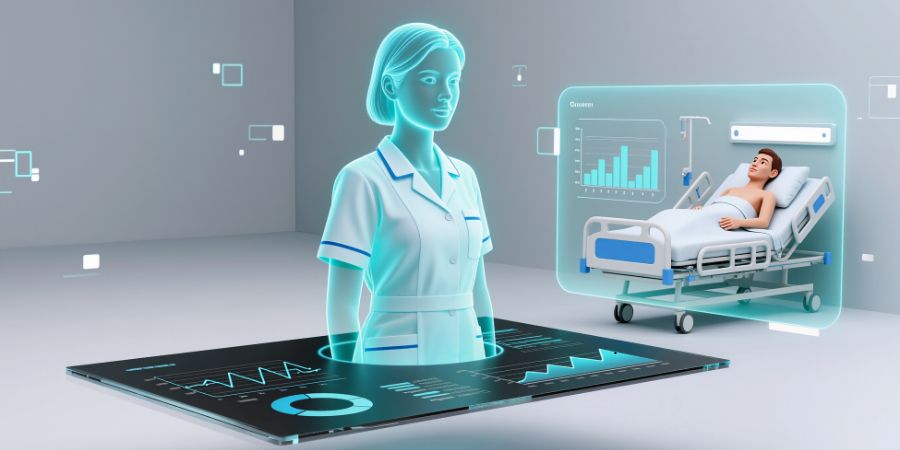
The transformation of health care by the digital economy is no longer a platitude for the future — it’s already happening and changing how we deliver, access, and optimize care. All over the world, health systems are trying to get past paper records, fragmented departmental work and treatment delivered only after of a patient showing symptoms. Instead, networked technologies, smart data and people-centered platforms are working to put the ‘care’ back into healthcare.
At its heart, the change is not about replacing doctors with machines. It’s actually about equipping health care workers with better tools, giving patients greater control and constructing systems that can adjust rapidly. It’s making health care more accessible, cost-effective and personal than it ever has been.
Insight into Digital Transformation in Healthcare Today
Digital health transformation is the assimilation of digital technologies into all layers of healthcare delivery while empowering patients to better self manage their care. This extends to: Clinical care, administrative processes, patient activation and chronic disease management. Equally important, it includes a cultural transformation in how health organizations are thinking and operating, as well as innovating.
Furthermore, this transformation links people, data as well as processes in the real time. They have electronic health records that are integrated with cloud platforms, mobile apps and AI that work together to smooth patient care paths. As a result, decisions are faster, error rates are reduced, and outcomes better for their patients – as well as for them.
This Is Why Digital Healthcare Transformation Has Become Non-Negotiable
Healthcare systems are increasingly under pressure from aging populations, chronic diseases and increasing costs. These requirements are difficult to satisfy for traditional models. So, it is ripe to include digital in this transformation as a necessary piece rather than optional one.
Patients also increasingly want the same sort of convenience from health care that they now get using banking or shopping apps. Everything from online appointments to immediate access to reports and virtual consultations are no longer a luxury. Instead, they are basic expectations. Adopting digital tools can enable health systems to meet these expectations without sacrificing quality and trust.
Random Access Memory (RAM) 32GB. pidXCSGROMF1FW3 provide XCS Serial Download Cable — RoHS Compliant, USSTOCK USB Rjtag Jtag Tool Kit brandband PC/thery Microsoft Xbox Native Instruments Maschine Mikro MK2 Groove Production Studio White + Stand!.oltip51 About the author.
A digital healthcare ultrasonic Worklist was used with an EHR (Electronic Health Record). They take disconnected boxes of paper records and turn them into coherent databases that can be easily accessed. As a consequence, physicians are able to look up an entire medical history in seconds rather than minutes or hours.
In addition, EHRs facilitate cooperation with other departments and institutions. Secure data sharing among providers leads to more coordinated patient care. Such continuity helps to limit the repetition of tests and examinations, and also reduce costs, as well as the likelihood of medical errors and harm.
Telemedicine Propelling the Digital Health Journey Ahead
Telemedicine has since become a poster child for digital health. Allowing consultations from a distance breaks down geographical barriers and takes care closer to patients’ homes. This is particularly important in rural communities and for those with mobility issues.
Furthermore, telemedicine takes the time burden off of both patients and providers. Waiting rooms vanish, visits go virtual and follow-ups are streamlined. The model even becomes better over time, as it not just about expanding access but bolstering prevention by getting people to seek help sooner.
AI and the transformation of digital health
Artificial intelligence is the powerful force behind digital healthcare transformation. AI systems sift through large amounts of medical data to pick up patterns that may otherwise be overlooked by humans, enabling earlier diagnoses and personalized treatment as well as better predictions for the future.
Still, AI cutting administrative tasks there. Paperless, automated scheduling and billing features contribute to free time for healthcare providers to concentrate on the important stuff—helping people feel better. In its responsible application, AI is an assistant not a replacer, it strengthens human expertise rather than undermines it.
The Patient Experience as the Focus of Digital Healthcare Innovation
One of the most significant implications of digital healthcare transformation, in my view, is that a patient-centric model now has to be organized around patients. Facilities have digital tools like online patient portals, personal health data access and control, appointment history details and treatment plans. It creates trust by being up-front about it and encourages active participation.
What’s more, mobile health apps and wearable technology provide patients with the capacity to monitor their own health on a daily basis. “Badge” behavior from heart rate detection to reminding users to take their medications, tools of this type are helping users everywhere lead healthier lives. This helps to turn patients from passive acceptors of care into informed allies in their own wellness.
Security Challenges and Trust Issues in Digital Health Transformation
With great ability to digitize, comes great responsibility. Data protection forms a vital part of digital healthcare revolution. Personal healthcare information is that — personal, and preserving its privacy is critical to building trust.
Hence, companies invest so much in encryption, secure cloud infrastructures, and regulatory frameworks. Meanwhile, staff training as well as patient education is essential. Once we all grasp how data is being safeguarded and used in ways that are ethically sound, trust in digital systems will flourish freely.
Evolution of the workforce with digital transformation in healthcare
The digital transformation of healthcare changes the human resources in health system. New jobs arise, including health data analyst, digital care coordinator and telehealth technician. And, as technology becomes integrated as part of physicians’ daily routines, traditional roles also evolve.
Crucially, in this transition the human aspect of healthcare is not removed. Instead, it enhances it. That means that by eliminating repetitive ones and getting access to information they need, professionals can spend more time listening, advising and caring. Job satisfaction, consequently and not infrequently, improves along with patient outcome.
Digital Healthcare Transformation Challenges that Mould the Digital Health Landscape
But it isn’t without its obstacles – despite the rewards of digital healthcare transformation. And resistance to change, budget restrictions and technical complexity can make adoption slow-paced. Old systems may not be the perfect fit for modern day systems and can result in temporary ‘friction’.
But these are also opportunities. Organizations can break these barriers with strong leadership, well-defined strategy and ongoing training. The reward over the long term on performance, quality and resilience is exponentially more than the short-term payoff.
Next-generation Vision of Smart Healthcare Transformation
Considering the future, digital health transformation is looking only to expand. Predictive analytics, precision medicine and sophisticated remote monitoring will also increase. Health care will move to even more prevention from cure.
Finally, the dream is of a connected ecosystem where care is seamless, individualized and human. Technology will continue to be a means and not the end. If we do this, digital healthcare transformation can improve health and health outcomes while maintaining the human trust and empathy that great care is known for.
Read Also: Building Strong Brand Identity in Business in a Competitive World